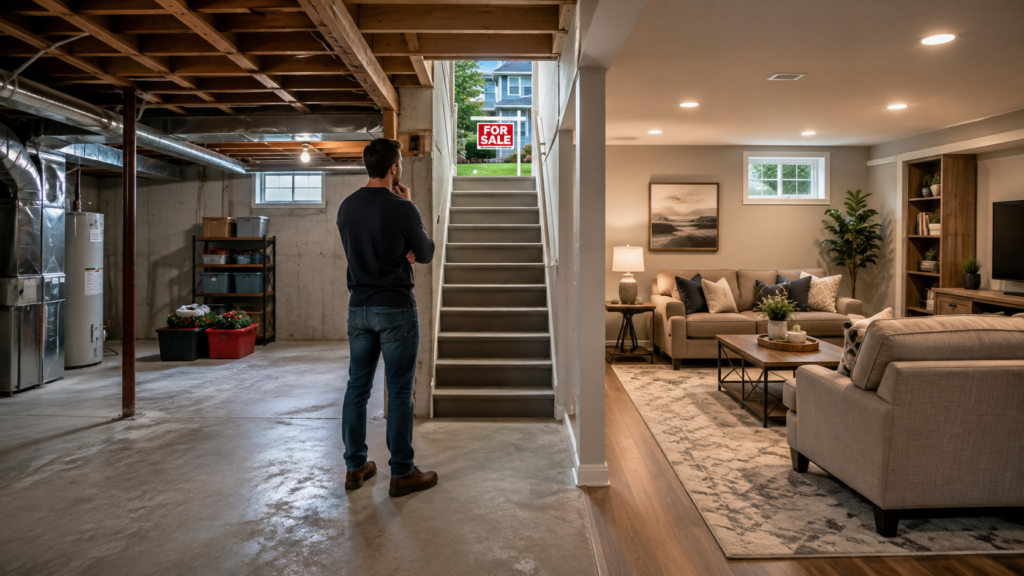
You have a listing date circled on the calendar, and every time you walk past the basement door, you feel a little guilty. Down there is 900 square feet of bare concrete, exposed joists, and holiday bins — space that could be a family room if you had the time and the cash. Your neighbor swears that finishing it will pay for itself. The contractor’s quote made you sit down.
So, is it worth finishing a basement before selling? The honest answer depends less on how good the finished basement looks and more on how appraisers, agents, and buyers in your ZIP code treat below-grade space. Those three groups don’t always agree — and one homeowner’s story further down shows how tangled that gets.
Here’s what the numbers actually say.
So what does a finished basement actually return?
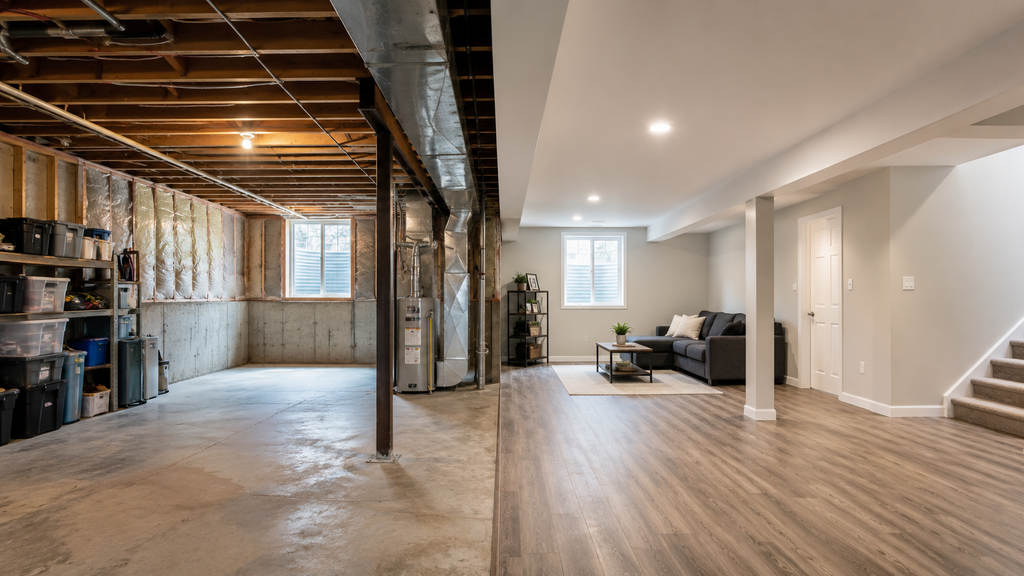
The most useful number comes from the people who sell houses for a living. In the National Association of Realtors’ 2025 Remodeling Impact Report, Realtors estimated that a basement conversion to living area recovers 71% of its cost at resale.
Worth knowing what that number is and isn’t: it’s a practitioner estimate of value added, not a measured result from tracked sales. It’s still the best national benchmark available, and it’s the one agents work from.
Run it against a real budget. Spend $40,000 finishing your basement and the resale bump lands near $28,000 — roughly $12,000 short, before the weeks of dust.
But the same report gives that project a Joy Score of 8.8 out of 10, which measures how happy homeowners are with the finished result. That gap between 71% and 8.8 is the whole story: a basement remodel is a fantastic project to live in and a mediocre one to sell.
For context, the same report scored an attic conversion at 67%, a closet renovation at 83%, and a new steel front door at 100%. Cheap, visible, above-grade work wins on return almost every time.
Return on investment also varies by location and by how your home compares with nearby properties, particularly whether finished basements are common in your local market.
Why doesn’t a finished basement count as square footage?
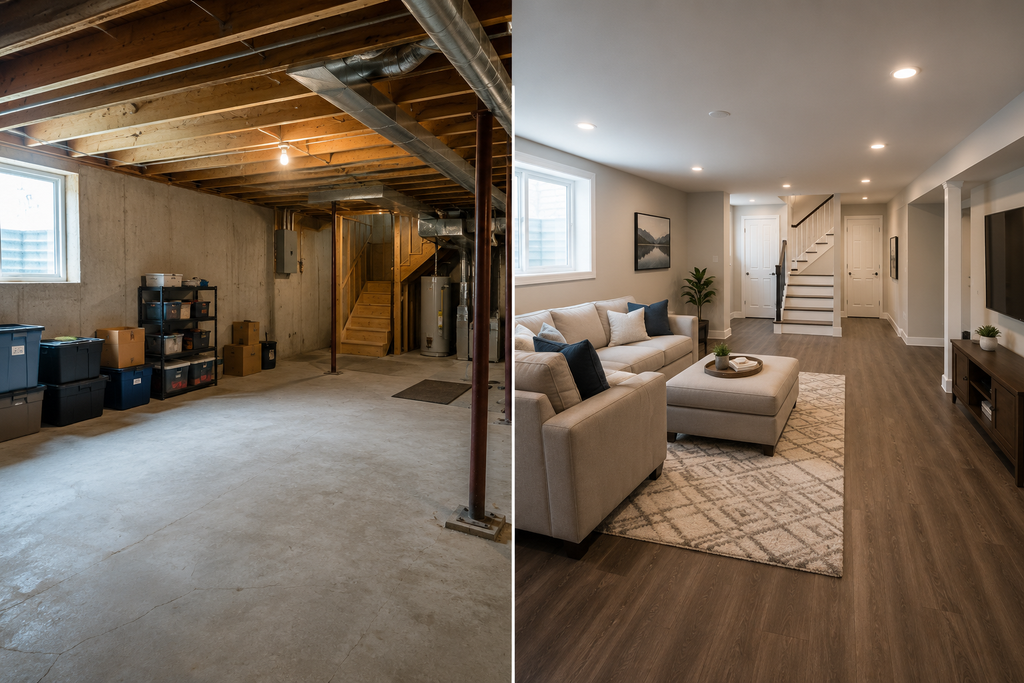
This is the part most homeowners never hear until the appraisal comes back, and it explains that 71% better than anything else.
Finished basement space does not get added to your home’s above-grade square footage. Fannie Mae’s Selling Guide is blunt about it: a level counts as below-grade “if any portion of it is below-grade, regardless of the quality of its finish or the window area of any room.” A gorgeous walk-out with big windows and a wet bar still doesn’t qualify.
Instead, the appraiser reports it separately on what the guide calls the “Basement & Finished Rooms Below-Grade” line of the sales comparison grid. The value is real — it’s just tracked in a different box, at a different rate.
How different? Chuck Argianas, a Chicago-area appraiser with more than 30 years of experience, explained the math to HomeLight this way: “Appraisers will take a baseline, say, of $100 a square foot for the above-grade space. And maybe the below-grade space is 70% or $70.” Other industry estimates put below-grade finished space at 50% to 70% of the above-grade rate.
That’s why a 1,000-square-foot finished basement doesn’t turn a 2,400-square-foot house into a 3,400-square-foot house on the listing sheet. It stays a 2,400-square-foot house with a nice basement. Charlotte agent Dan Jones described the conversation to HomeLight plainly: “It’s tough to have that conversation around basement value because sellers can get mad when they find out that square footage doesn’t double the value of their home.”
What do agents actually tell sellers to do first?
Here’s the finding that should settle the question for most people, and almost nobody writing about basements mentions it.
That same NAR report asked Realtors which projects they recommend sellers complete before listing. The top answers were painting the entire home (50% of agents), painting one interior room (41%), and new roofing (37%), followed by a kitchen upgrade (30%) and a bathroom renovation (24%).
Basement conversion doesn’t appear on that list at all — in the very same report that gives it a Joy Score of 8.8.
Read that as a signal, not an insult. Agents push sellers toward fast, cheap work that photographs well and touches every buyer who walks in. Basement finishing is slow, expensive, and only matters to the slice of buyers who want that kind of living area.
How much does it cost to finish a basement?
Cost estimates vary widely, mostly because “finished” means very different things.
At the basic end — drywall, flooring, paint, simple lighting, plenty of sweat equity — This Old House puts the range at $7 to $23 per square foot, or roughly $7,000 to $23,000 for a 1,000-square-foot basement. For mid-range work by a general contractor, Opendoor reports $30 to $75 per square foot, which puts that same basement at $30,000 to $75,000.
Those figures describe different projects, not a contradiction. The gap is bathrooms, egress windows, HVAC extensions, permits, and finish quality — add a full bath and a legal bedroom, and you land firmly in the second range.
Then there’s time. Finishing a basement typically takes three to eight weeks, with an average of about five weeks, and permitting or inspection delays can stretch the timeline further — enough to collide with a planned listing date.
One homeowner’s decision not to finish
A homeowner posting as gardengrlz asked the Houzz community whether to finish a basement before selling, then shared what she decided: no.
Her reasoning was concrete. Her home already had four bedrooms and two and a half baths, so the basement wasn’t solving a shortage. Her market was rural, where the usual return-on-investment averages didn’t seem to apply. The realtors she spoke with gave her conflicting opinions.
The detail that tipped her was next door. Neighbors with an essentially identical house — one with a finished basement — had gotten feedback that “the house is just too big” and sat for six months without an offer.
She also landed on something worth repeating: “Many people don’t want or even like how previous owners have finished their basements. They’d rather have that blank canvas to do it themselves.”
That’s one household in one market, not a rule. But a finished basement can narrow your buyer pool as easily as it widens it.
Finishing your basement before selling does make sense
There are real cases where the math flips.
You’re not selling for a couple of years. This is the strongest one. At a Joy Score of 8.8, you get years of actual use out of the space, and the estimated 71% resale recovery becomes a discount on living well rather than a loss.
Every comparable home in your neighborhood already has one. If unfinished basements are the exception on your street, buyers will price yours against homes that have finished space, and the shortfall shows up in your offers whether you finish or not.
The basement is already partly done. If the framing, wiring, and drywall are in and you’re only closing a small gap, the cost per dollar of added value is far better than starting from bare block.
You can pay cash and enjoy it. Financing a project estimated to recover 71% is how a renovation turns into a real loss.
When you’re better off leaving it unfinished
Skip the project if you’re listing in the next few months — you’d be rushing decisions a buyer will live with, with no time to enjoy the space yourself.
Skip it if the basement has any moisture history. Sealing water problems behind new drywall is the fastest way to create a disclosure headache and a callback after closing. Fix the water first, always.
Low ceilings are another honest stopping point. If headroom is tight, finishing can make the space feel smaller and more awkward than leaving it open.
The cheaper middle ground most sellers skip
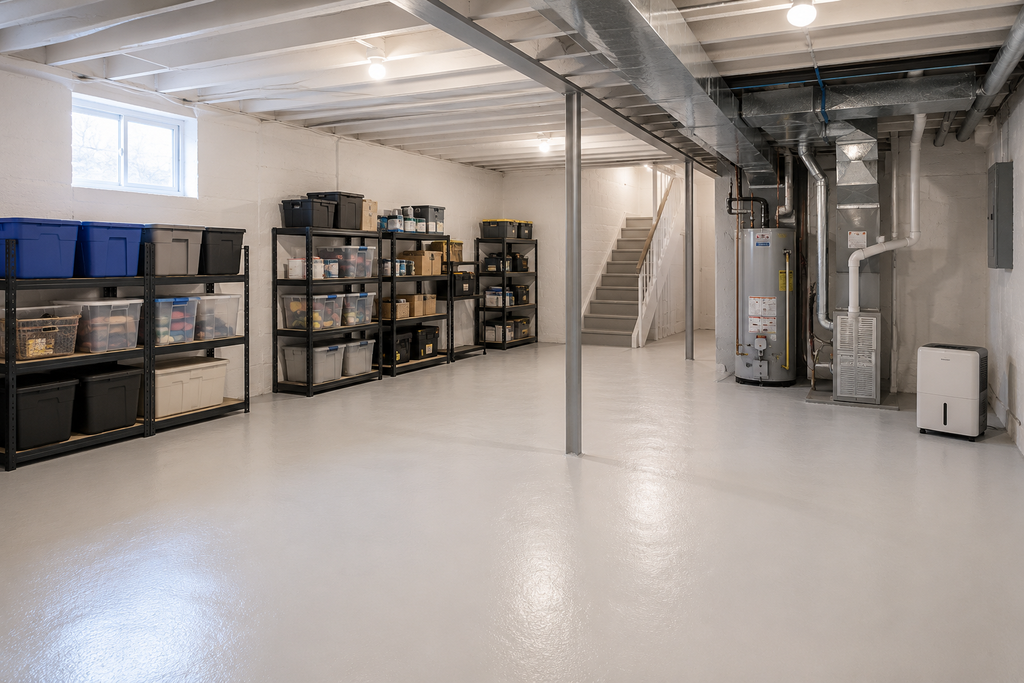
You don’t have to choose between raw concrete and a full remodel. Between those two sits a cleanup that costs a small fraction of a basement renovation and does most of the work on buyer perception.
Paint the floor and walls with a masonry-appropriate paint in a light color. Add brighter fixtures so the space reads as open instead of cavernous. Clear the clutter, run a dehumidifier, tidy the area around the mechanicals, and give the storage a defined home on real shelving.
Buyers walking through a bright, dry, organized, unfinished basement see potential. Buyers walking through a dim room full of boxes see a problem. Same square footage, very different reaction — for a few hundred dollars instead of tens of thousands.
Will a finished basement bedroom actually count as a bedroom?
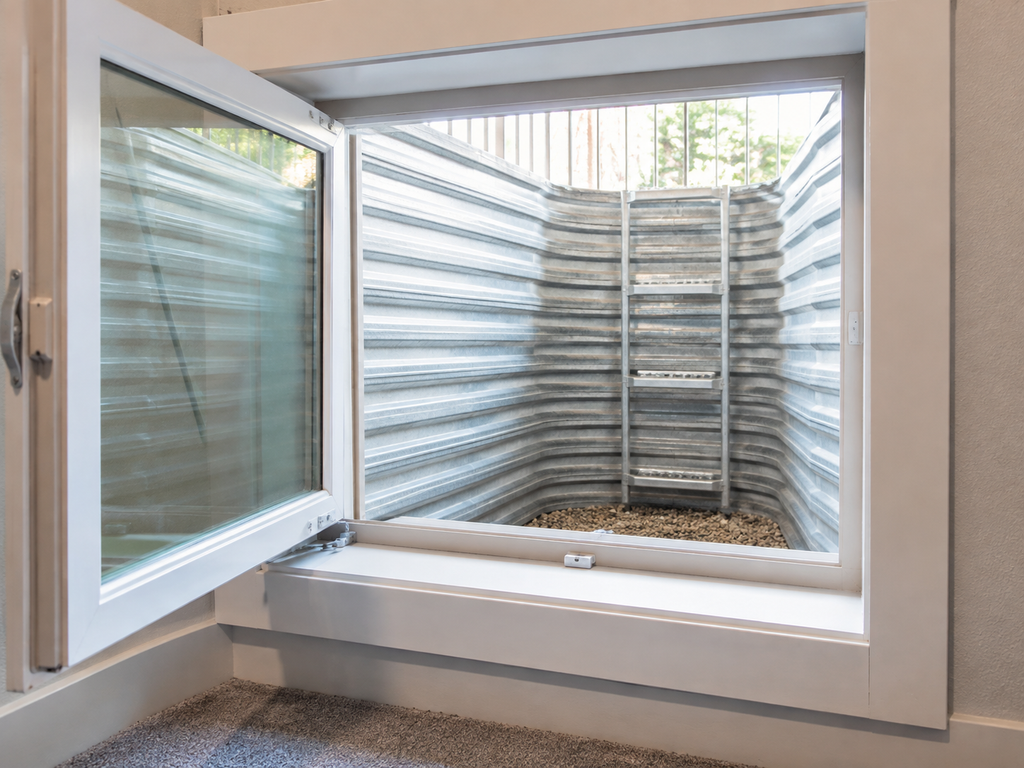
This is where finishing gets legally serious, and where a lot of pre-sale projects go sideways.
A below-grade sleeping room needs a way out in an emergency. The requirement comes from Section R310.1 of the International Residential Code, quoted here from Colorado’s adoption of the 2021 edition: “Basements, habitable attics and every sleeping room shall have not less than one operable emergency escape and rescue opening.” In practice, that usually means an egress window and window well, which is real excavation and real money.
Specific opening sizes, sill heights, permit triggers, and inspection rules vary by state and municipality, since jurisdictions adopt and amend the building code differently.
Whether a finished below-grade room can be advertised as a bedroom in your MLS is a separate question with its own local rules.
One thing is not ambiguous: unpermitted finished space is a liability at closing, not an asset — buyers’ agents ask, inspectors notice, and lenders care. Basement work involves electrical circuits and sometimes structural changes to framing or egress openings — hire licensed professionals and confirm requirements with your local building department before anyone picks up a saw.
The Bottom Line
Finish your basement because you want to use it, not because you’re hoping a buyer will pay you back for it. The estimates say they mostly won’t — 71% back, valued on a separate line, invisible in your square footage — and the agents who sell homes every day would rather you spent that money on paint and a roof.
Here’s something you can do this afternoon: pull up recent sales in your neighborhood, find three that sold with finished basements and three without, and compare the final numbers against their above-grade square footage. Ten minutes on a listing site will tell you more about whether it’s worth finishing your basement before selling than any national average ever could.
Reviewed by our editorial team, informed by licensed professionals and industry sources cited above.
FAQs
Does a finished basement increase property taxes?
Finished basement space can increase a property’s assessed value, which may raise the property tax bill. Assessment rules vary by state and local jurisdiction, so check with your local assessor’s office before starting.
Do I have to disclose an unpermitted finished basement when selling?
Unpermitted work can become an issue during a sale and may affect disclosure, appraisal or financing, inspections, and negotiations. Disclosure requirements vary by state and local jurisdiction, so confirm your obligations with a local real estate attorney or licensed real estate professional.
Should I finish the basement myself to improve the return?
Doing the work yourself is what puts a project at the low end of the cost range, which does narrow the gap between what you spend and what you get back. But basement finishing involves electrical circuits and often egress or framing changes, so hire licensed professionals for those portions and confirm permit requirements with your local building department.
Is it better to finish the basement or offer the buyer a credit toward finishing it?
A credit costs you dollar for dollar with no construction delay, while finishing the space costs you more than it returns and locks the buyer into your design choices. Which nets out better depends on how buyers in your specific market price finished below-grade space.
Does a finished basement help a home sell faster?
It can appeal to buyers who want extra living area, but it also narrows appeal for buyers who prefer a blank canvas, as one Houzz homeowner’s neighbors discovered when their finished-basement home sat six months without an offer.
